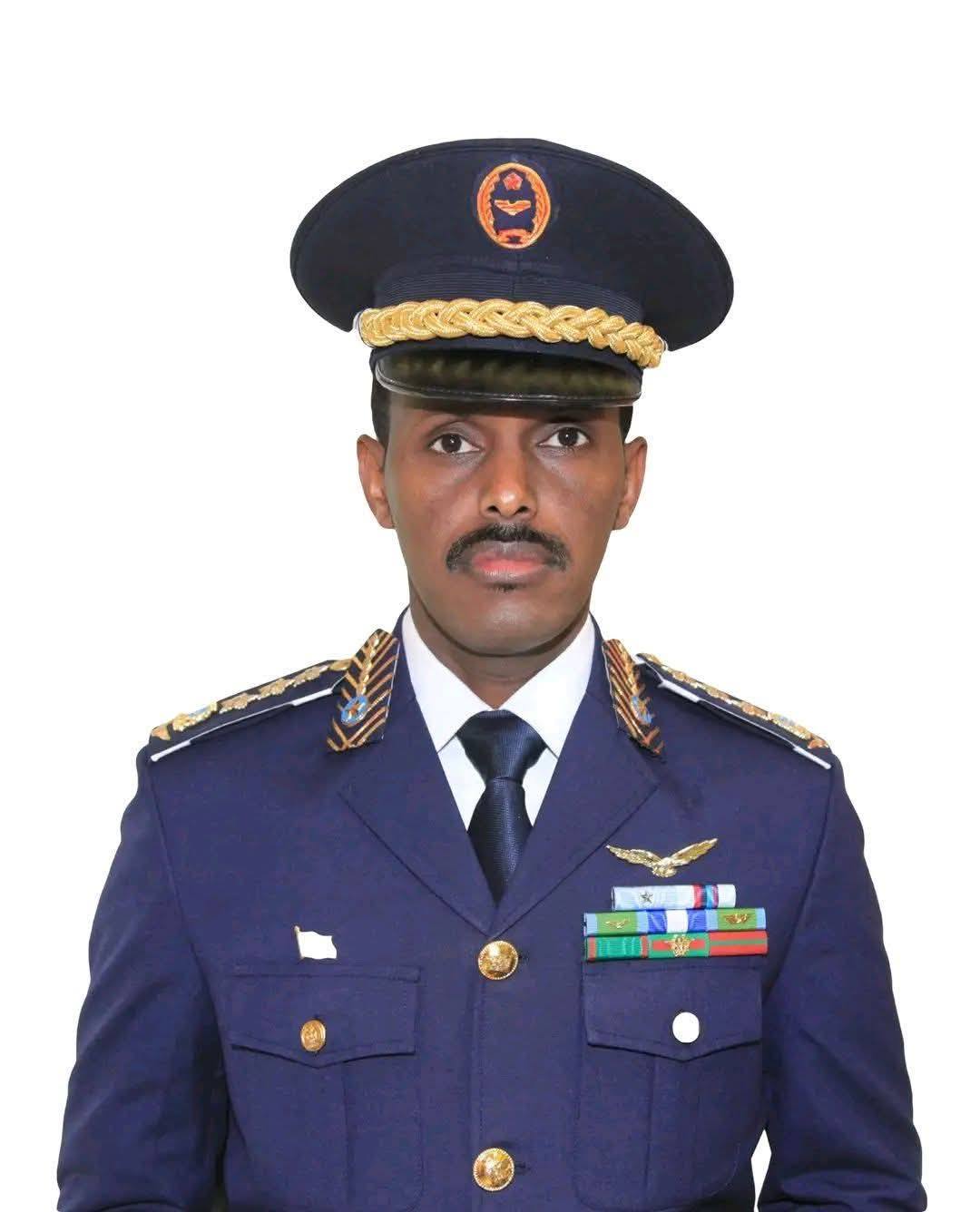
Somalia Appoints Brig. Gen. Abdirisaq “Qaloombi” as Air Force Chief as Mogadishu Accelerates Military Modernization.
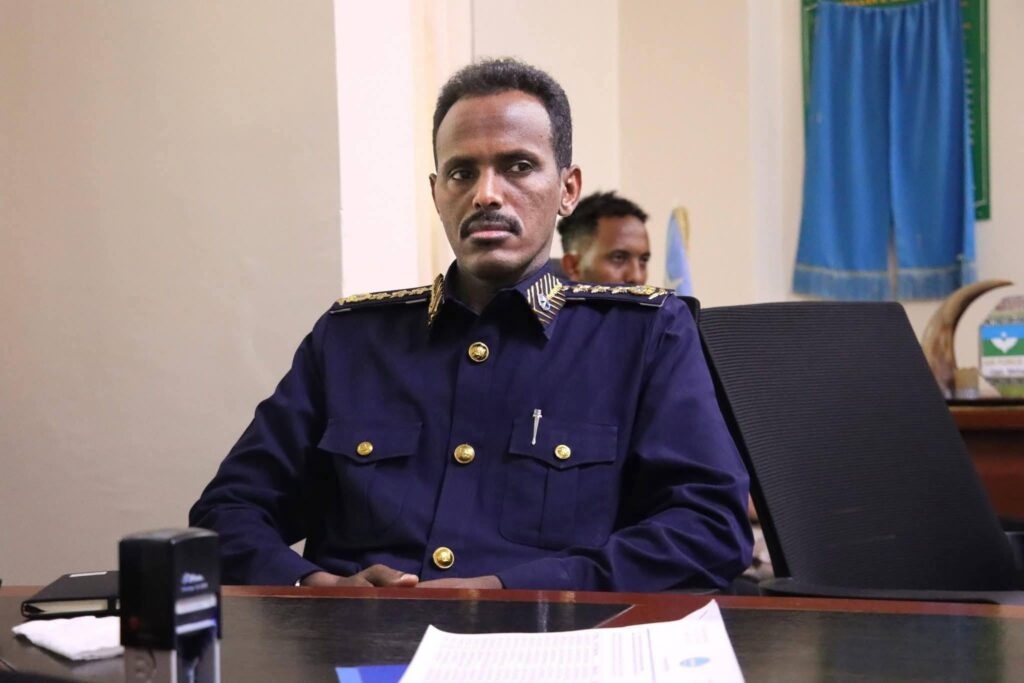
By ASAL POST | Defence & Security Desk
The Federal Government of Somalia has appointed Brigadier General Abdirisaq Mohamud Haji, widely known within defense circles by the call sign “Qaloombi,” as the new Commander of the Somali Air Force, marking a significant step in the country’s broader efforts to rebuild and modernize its national defense forces.
Brig. Gen. Qaloombi officially assumed command on March 7, 2026, during a formal ceremony in Mogadishu, attended by senior commanders of the Somali National Armed Forces, defense officials, and representatives from multiple branches of the military.
The leadership transition comes at a crucial moment as Somalia intensifies reforms aimed at strengthening its armed forces and expanding its capacity to confront the militant group Al-Shabaab while gradually rebuilding long-neglected military institutions.
Formal Transfer of Command
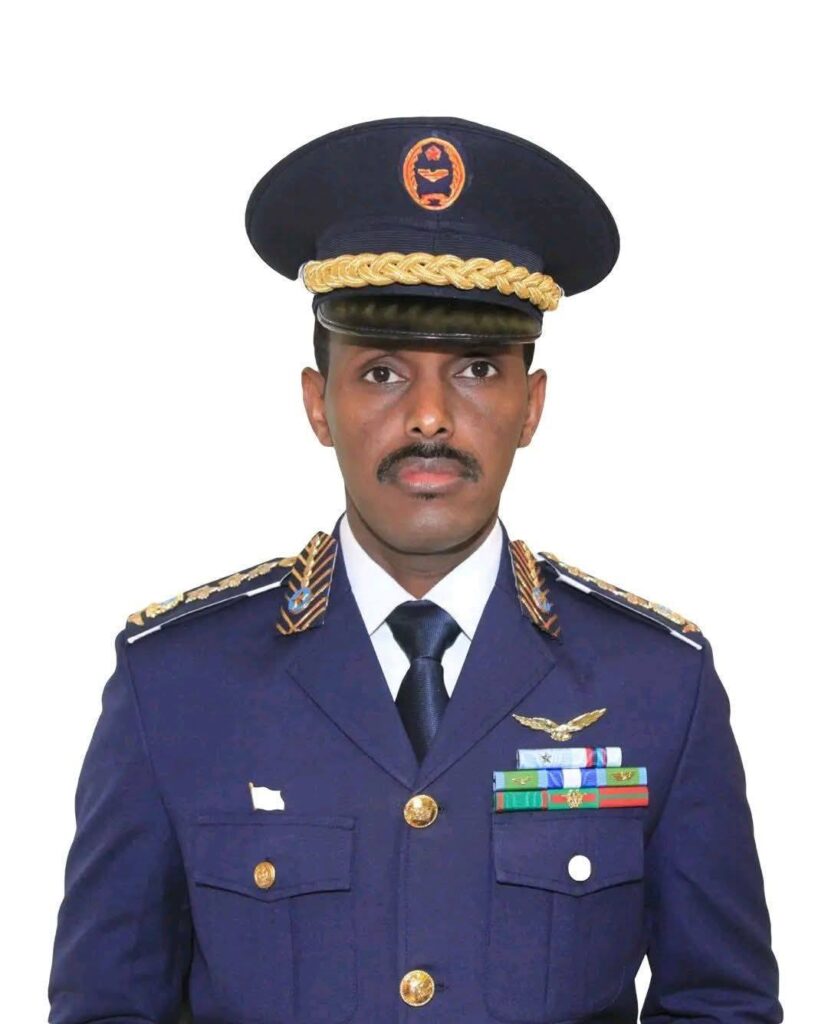
The ceremony followed established military protocol and symbolized continuity of leadership within Somalia’s armed forces.
The transfer of authority was presided over by Brigadier General Madey Nurey Sheikh, popularly known as “Uforow,” the Deputy Commander of the Somali National Armed Forces.
During the event, Colonel Ali Ibrahim Abdi, who had been serving as Acting Commander of the Air Force while simultaneously holding the role of Deputy Air Force Commander, formally handed over operational command of the force to Brig. Gen. Qaloombi.
Senior officers from the General Staff and representatives from several military branches attended the ceremony, highlighting the strategic importance the Somali defense establishment places on restoring a capable and professional air force.
Strategic Appointment Amid Military Reforms
The appointment of Brig. Gen. Qaloombi was initially announced by the Federal Government on February 28, 2026, as part of an ongoing restructuring of Somalia’s security architecture.
Defense analysts say the decision reflects a broader institutional shift aimed at placing a new generation of professionally trained officers in key leadership roles as Somalia rebuilds its military after decades of collapse following the civil war that began in 1991.
For Somali defense planners, restoring the Air Force is seen as a critical pillar of national security, particularly as the country works toward strengthening its sovereignty and reducing reliance on international security missions.
A Commander with Extensive Training Experience
Brig. Gen. Qaloombi is widely respected for his role in the development and oversight of Somali military units trained in Eritrea, a program that produced thousands of soldiers who are now integrated into the Somali National Army.
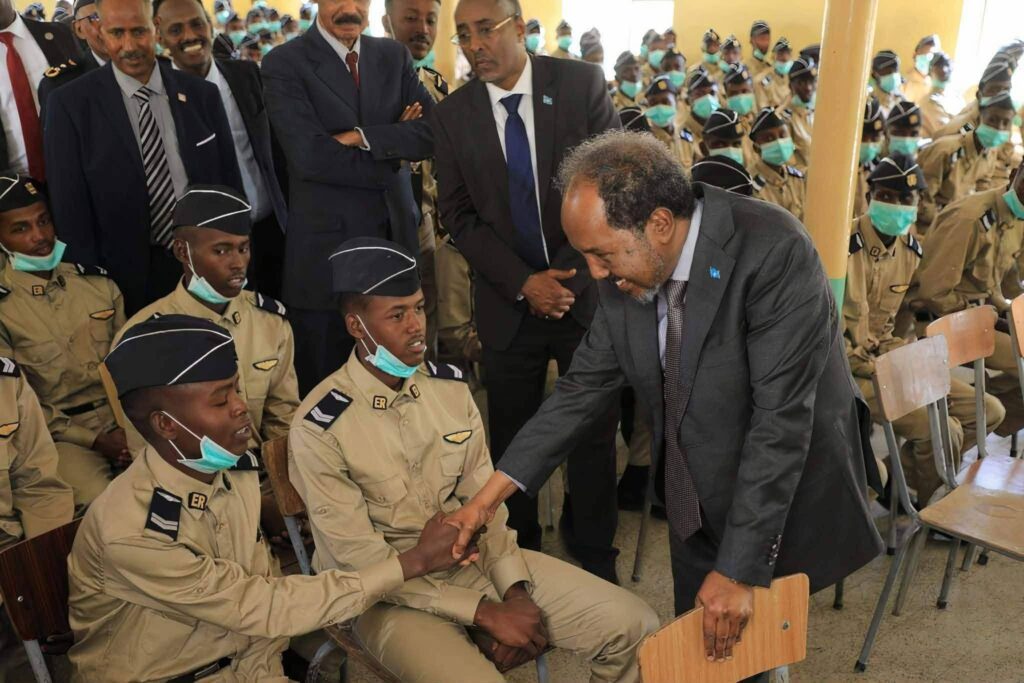
His expertise in military training and personnel development has earned him recognition among defense officials as one of the key architects of Somalia’s emerging professional military structure.
Colleagues describe him as a disciplined and methodical officer with strong leadership qualities, known for his focus on operational readiness and institutional development.
Interestingly, his professional journey began outside the military. Qaloombi initially trained in the health sciences and worked in the medical field before deciding to join the armed forces.
Military officials say that analytical training from the medical profession helped shape his methodical approach to leadership and strategic planning.
Early Life Shaped by Conflict
Brig. Gen. Qaloombi was born in the city of Beledweyne in Somalia’s Hiiraan Region during the late 1980s, just before the collapse of the Somali state.
Like many members of Somalia’s current generation of leaders, his early life was shaped by conflict and displacement. Following the outbreak of the civil war in 1991, his family spent several years as refugees in Kenya before eventually returning to Somalia.
Much of his later education and professional development took place in Mogadishu, where Somalia’s security institutions are now being rebuilt.
A Family Legacy of Scholarship and Service
General Qaloombi comes from a respected family known for both religious scholarship and military service.
His paternal lineage is associated with the Qaloombi family, widely recognized across Somalia and Kenya for its tradition of Islamic scholarship. One of the most prominent figures in the family was the late scholar Sheikh Abdullahi Haji Qaloombi, also known as Sheikh Abdullahi Hiiraan, who played a major role in Islamic education.
His father, Mohamud Haji, served as an officer in Somalia’s armed forces and was wounded during the Ogaden War of 1977 between Somalia and Ethiopia.
Another influential figure in his family was his maternal uncle, Dr. Mohamed Siraad Doolaal, an Oxford-educated scholar who later became one of the founding members of the Ogaden National Liberation Front.
Rebuilding Somalia’s Air Power
As the new commander, Brig. Gen. Qaloombi now assumes responsibility for one of the most strategically sensitive portfolios in Somalia’s defense sector.
The Somali Air Force, once one of the most capable aerial forces in the Horn of Africa, collapsed after the fall of the central government in 1991.
For more than three decades, Somalia lacked a fully operational air force capable of protecting its airspace or supporting ground operations.
Defense planners are now pursuing a phased reconstruction program that includes:
- Pilot training programs
- Aircraft maintenance infrastructure
- Airspace monitoring and surveillance systems
- Air support for ground forces fighting militant groups
These reforms are also linked to Somalia’s long-term plan to gradually assume full responsibility for national security from the African Union Support and Stabilization Mission in Somalia (AUSSOM).
Türkiye and International Support
Somalia’s military modernization is being supported by several international partners, most notably Türkiye.
Türkiye operates the TURKSOM Military Training Base in Mogadishu, one of the largest overseas military training facilities run by Ankara.
Since its establishment in 2017, thousands of Somali soldiers have received professional military training at the base, significantly strengthening the operational capacity of the Somali armed forces.
Turkish support has included military equipment, training programs, and operational assistance aimed at helping Somalia combat Al-Shabaab and stabilize the country.
Plans to Acquire Modern Fighter Jets
As part of its long-term plan to restore aerial defense capability, Somalia is also exploring the acquisition of modern fighter aircraft.
Defense sources indicate that Pakistan has been discussing a possible deal with Somalia to supply the country with JF-17 Thunder multirole fighter jets.
Reports suggest the potential deal could involve up to 24 aircraft, which would represent the most ambitious modernization effort for Somalia’s air force in decades.
The aircraft, jointly developed by Pakistan and China, are capable of performing air defense missions, ground attack operations, and aerial reconnaissance.
If the deal is finalized, the jets would dramatically enhance Somalia’s ability to secure its airspace and support counter-terrorism operations.
A New Generation of Military Leadership
For many Somali security analysts, Brig. Gen. Qaloombi’s rise reflects the emergence of a new generation of leaders shaped by conflict but determined to rebuild the country’s institutions.
From refugee camps to senior command positions, his career path mirrors the broader journey of Somalia itself moving from instability toward reconstruction.
As Somalia continues rebuilding its armed forces and expanding international defense partnerships, officials say the revival of the Somali Air Force could become a decisive factor in strengthening national security.
For the country’s defense establishment, the message is clear: Somalia’s next chapter in safeguarding its sovereignty may be written not only on the ground but in the skies above.