How Garissa County wants to turn water challenges into economic opportunities, modernize its pastoral economy and build a climate-resilient investment hub for Northern Kenya and the Horn of Africa.
ASAL POST | EXCLUSIVE
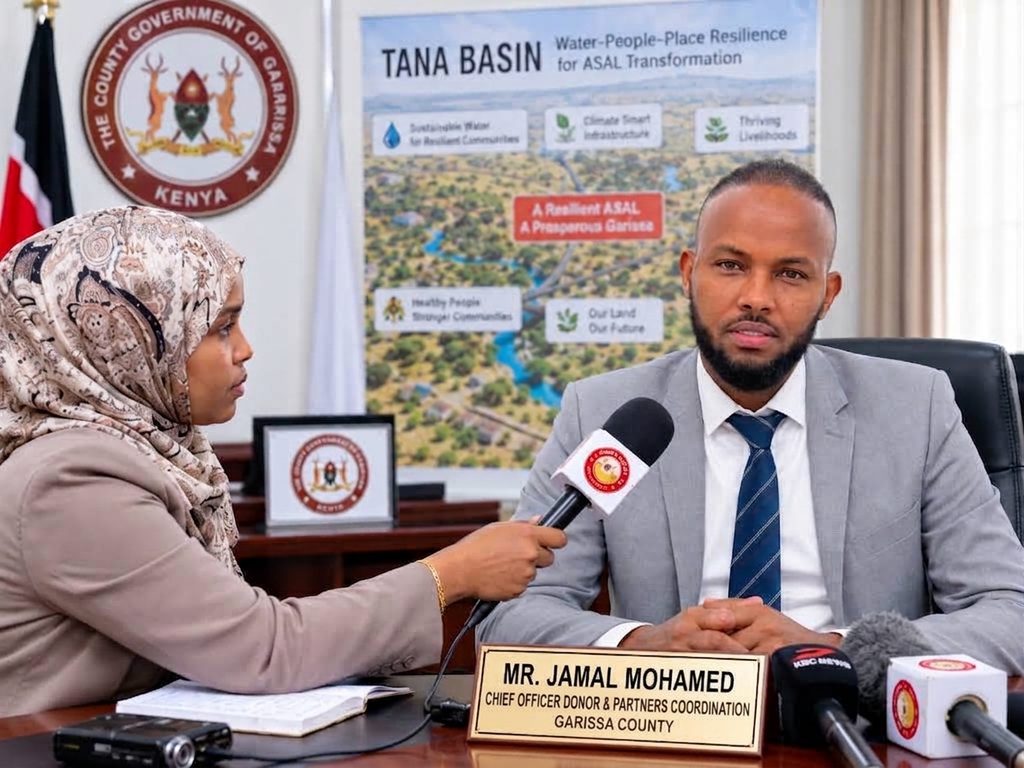
GARISSA, KENYA – In the wake of the OND 2026 Participatory Scenario Planning Workshop in Dadaab, public discussion across the Arid and Semi-Arid Lands has been captivated by bold declarations surrounding the transformative Garissa-Dubai vision. In an exclusive interview with ASAL POST, Mr. Jamal Mohamed, County Chief Officer for Donor and Partner Coordination, broke his silence to clarify the initiative, demystify upcoming international partnerships, and explain how Northern Kenya plans to turn its greatest climate vulnerabilities into bankable economic strength.
What would it take for Garissa to transform from a county repeatedly exposed to drought, flash floods and riverine flooding into one of Northern Kenya’s most resilient and investment-ready economic hubs?
For Jamal Mohamed, County Chief Officer for Donor and Partner Coordination, the answer lies in a long-term development strategy that combines climate resilience, urban transformation, livestock value addition, strategic infrastructure and international partnerships.
It is a vision increasingly described as “Garissa – the next Dubai in Africa.”
But the phrase comes with an important qualification.
According to the Chief Officer, Garissa is not seeking to physically replicate Dubai or reproduce its architecture in a desert environment. Rather, the Dubai comparison represents an ambition for the scale of investment, innovation, infrastructure and economic transformation that a city can achieve.
“When we say that Garissa could become the next Dubai in Africa, we are not suggesting that Garissa should become a replica of Dubai,” Jamal said.
Instead, he envisions Garissa becoming a major economic, logistics, livestock, water and investment hub serving Northern Kenya and the wider Horn of Africa.
A Vision Built Around Garissa’s Climate Reality
The most fundamental challenge facing the vision is also one of Garissa’s defining characteristics: water.
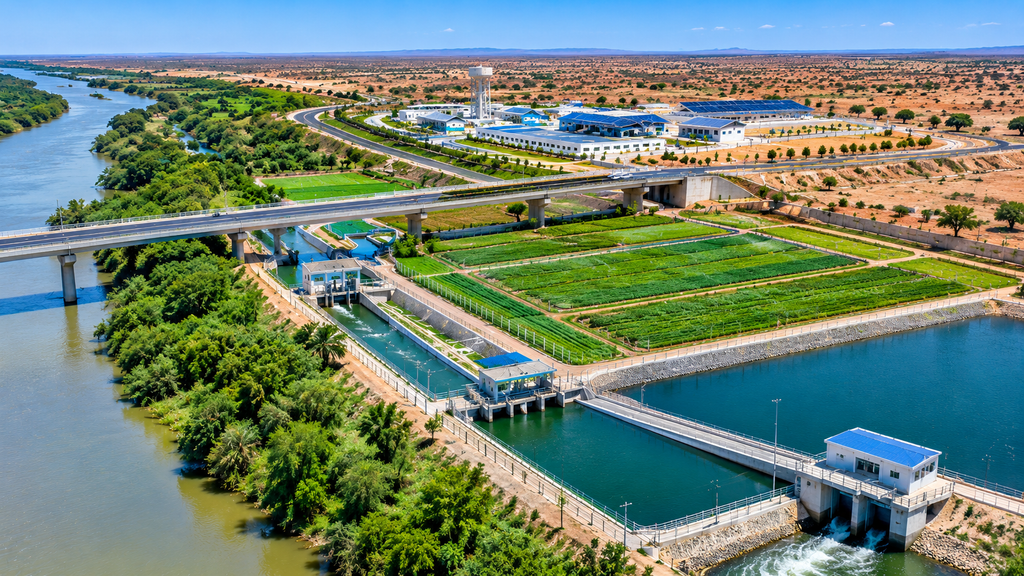
The county experiences prolonged droughts alongside periods of flash flooding and riverine flooding associated with the Tana River basin. Rather than treating these extremes solely as disasters, the emerging development philosophy seeks to reconsider how water is managed.
Jamal argues that water should not always be viewed simply as a threat.
With appropriate engineering, planning and nature-based solutions, he says, seasonal water can become a development asset.
Garissa is therefore looking at lessons from countries such as the Netherlands, Sri Lanka and Brazil, where planning and engineering have been used to help communities live with water rather than simply attempt to eliminate its impacts.
For Garissa, that means designing infrastructure around the county’s environmental realities.
This includes drainage systems that recognize natural water flows, roads and public infrastructure designed with flood risks in mind, water-storage systems capable of capturing excess water during wet periods, and land-use planning that discourages development in high-risk areas.
The broader objective is to move from a reactive disaster-response model to a resilience-based development approach in which climate risk is considered when major infrastructure and investment projects are conceived.
“The question is not whether Garissa has too much or too little water; it is how we manage, store, redirect and economically utilize the water we receive,” Jamal said.
Mapping the Water Before Building the City
Before major infrastructure can be developed, however, the county needs a better understanding of how water actually moves through Garissa Town.
That is where the proposed Nature-Based Solutions scan and GIS-based assessment comes in.
The Chief Officer said technical teams, including UNEP and Nature-Based Solutions specialists, are expected in Garissa on September 24 to assess fluvial and pluvial flooding.
The exercise is expected to use Geographic Information System (GIS) technology to examine where water originates, how it moves through the urban environment, where it accumulates and which communities and infrastructure face the greatest exposure.
The technical assessment is significant because the county is seeking to develop bankable investment propositions, rather than isolated infrastructure projects.
Potential interventions could include improved drainage networks, restoration and protection of natural waterways, water-retention and harvesting infrastructure, appropriate road elevations and other measures designed to reduce both riverine and rainfall-related flooding.
The intention is to understand the entire urban water system before deciding which interventions should be financed.
From Disaster Response to Anticipatory Action
The long-term infrastructure agenda is being developed alongside Garissa’s immediate disaster-preparedness efforts.
Jamal says the two approaches are complementary.
While investments in water infrastructure and climate-resilient development are intended to address structural vulnerabilities over the long term, the county’s Participatory Scenario Planning and multi-agency preparedness initiatives are designed to minimize the immediate impacts of anticipated heavy rains.
This means early-warning information, contingency planning, pre-positioning of resources, community preparedness and coordination among government agencies, UN bodies, NGOs and local actors.
The philosophy is straightforward: Garissa cannot wait for a flood to happen before preparing for it.
At the same time, long-term infrastructure should reduce the underlying risks that repeatedly turn climatic events into humanitarian emergencies.
“Disaster management becomes part of development planning rather than remaining an emergency-response function,” Jamal said.
The 90 Per Cent Question: What Happens to Pastoralists?
Perhaps the most important question surrounding the vision is whether a rapidly modernizing Garissa will remain connected to the pastoral economy that sustains the county.
The answer from the county administration is emphatic: it must.
The County Statistical Abstract referenced in the interview indicates that approximately 90 per cent of the county’s population depends directly or indirectly on pastoralism and the pastoral agro-economy.
That reality, Jamal says, makes pastoralism central to not separate from the county’s economic transformation.
The proposed model is therefore not about replacing pastoralism with an exclusively urban economy.
Instead, the objective is to establish stronger links between rural production and urban markets.
Garissa Town, under this vision, would become a major market, processing, logistics and services centre for livestock produced across the county and the wider region.
Pastoralists would ideally have access to more efficient livestock markets, better prices, veterinary and financial services, and stronger connections to domestic, regional and potentially international markets.
The strategy also points to investments in infrastructure supporting pastoral mobility and resilience, including water infrastructure, livestock markets, roads, veterinary services, animal-health systems, fodder production and early-warning mechanisms.
From Livestock Trading to a Regional Value-Addition Hub
The livestock sector sits at the heart of the proposed economic transformation.
Jamal says Garissa must move beyond simply selling live animals and instead develop the wider livestock value chain.
That includes livestock production and aggregation, transportation, feedlots, veterinary services, modern slaughter facilities, meat processing, cold-chain infrastructure, hides and skins, leather processing and related services.
Such infrastructure could create employment, generate county revenues and improve market access for pastoralists.
The county also sees better livestock-market management and revenue administration as important components of the transformation.
The ultimate ambition is to position Garissa not merely as a place where livestock are traded, but as a regional livestock economy and value-addition hub.
This is where the urban and pastoral components of the vision converge.
A stronger Garissa Town creates stronger markets for pastoralists, while a resilient pastoral economy provides the productive foundation for urban growth.
From Baku and Nairobi to the Investment Pipeline
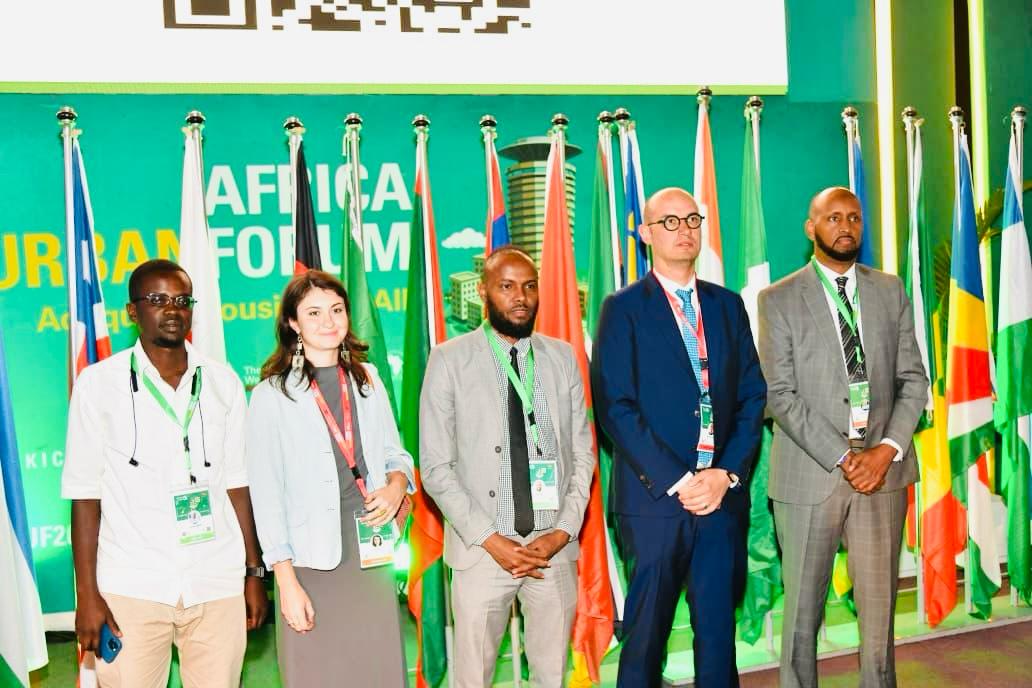
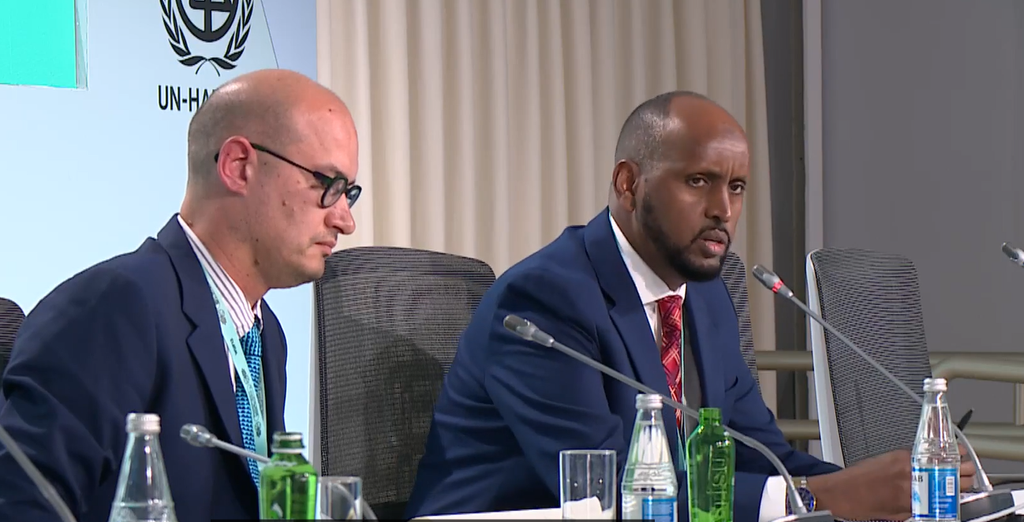
The vision has also been taken to international urban-development platforms, including the World Urban Forum in Baku and the African Urban Forum in Nairobi.
But the Chief Officer is careful to distinguish between international engagement and actual investment.
Discussions, expressions of interest and technical engagements should not, he cautions, be presented as confirmed investments.
The purpose of the international engagements has been to position Garissa on the investment map and develop partnerships around priorities such as urban water resilience, climate adaptation, nature-based solutions and infrastructure.
The immediate outcome is therefore an emerging pipeline of technical and investment discussions.
The next stage involves feasibility studies, technical assessments, investment structuring and due diligence before projects can potentially progress towards financing and implementation.
For Garissa residents, Jamal says, the ultimate measure should not be the number of conferences attended or international meetings held.
The question is much simpler:
What investment actually reaches Garissa, and what economic and social value does it create?
The Bankability Test
That question brings the vision to perhaps its most important word: bankability.
Large infrastructure projects cannot simply depend on ambitious announcements.
They require project preparation, feasibility studies, environmental and social assessments, land and technical due diligence, financial structuring and agreements between the relevant parties.
The proposed projects are therefore still moving through the technical and development stages.
The county’s potential indicators of progress include the number of bankable projects developed, feasibility studies completed, investors engaged, expressions of interest received, projects reaching financial close, private capital mobilized and projects actually commencing implementation.
The shift, in other words, is from pitching ideas to preparing investable projects.
What Investors Want from Garissa
For investors, the challenges are equally clear.
Security, land ownership and tenure, infrastructure, utilities, connectivity, markets and the regulatory environment all influence investment decisions.
Jamal says Garissa must acknowledge these concerns and systematically reduce the risks faced by potential investors.
That includes improving information on land and land-use planning, strengthening infrastructure planning, ensuring public consultation and providing credible information about the operating environment.
The proposed GIS and mapping work could also help address a major information gap by providing investors with reliable spatial and technical information.
The objective is to make Garissa “easier to understand and easier to invest in.”
World Bank and UNEP: A Development Process, Not a Financing Guarantee
The proposed engagement with UNEP and the World Bank is another area requiring careful interpretation.
At this stage, the county describes the process primarily in terms of technical assessment and project development, rather than a confirmed commitment to finance major infrastructure.
The Nature-Based Solutions scan and UNEP-related technical work are intended to help understand the scale and spatial characteristics of Garissa’s flooding challenge.
The resulting evidence could inform the development of a bankable project through the UNEP-supported process.
The potential role of the World Bank, according to the Chief Officer, is particularly relevant to de-risking and creating conditions capable of attracting private investment.
This is significant because the scale of infrastructure envisioned cannot necessarily be financed from county government resources alone.
The broader objective is to move from identifying problems to developing solutions that are both technically sound and financially viable.
Land, Communities and the ESG Question
Any major transformation also raises questions about land access, compensation and community rights.
The county administration says proposed developments will need to comply with applicable Environmental, Social and Governance (ESG) requirements and safeguard the interests of affected communities.
Jamal says community engagement should begin at the project-development stage not after major decisions have already been made.
Communities, he argues, need to understand what is being proposed, why it is being proposed, how they could be affected and what benefits and risks may arise.
Where land is required, access, valuation and compensation should follow the applicable legal and institutional framework, with relevant national institutions and affected communities involved.
Particular attention, he says, must also be given to vulnerable groups who could be disproportionately affected by development.
For the county, ESG should not be viewed merely as an investor requirement.
A sustainable project, Jamal argues, must be environmentally appropriate, socially inclusive and economically viable.
Can Garissa Become the Next Dubai in Africa?
The vision is ambitious.
But its success will ultimately depend on whether Garissa can move beyond a compelling narrative and convert the concept into bankable projects, financing and implementation.
The county has strategic advantages.
Its position along important regional economic corridors, including the LAPSSET and Garissa–Kismayo corridors, could create opportunities in trade, logistics, livestock, agriculture, energy and other sectors.
Yet infrastructure alone will not deliver the transformation.
Garissa will require coordinated investment planning, stronger urban planning, improved water infrastructure, climate-resilient development, modern livestock markets, private-sector participation and sustained partnerships with development partners and financial institutions.
Most importantly, the county will need to maintain a clear connection between its urban ambitions and the communities that underpin its economy.
For a county where pastoralism remains central to livelihoods, where water can arrive as both a scarce resource and a destructive force, and where investment is still being converted from discussions into project pipelines, the challenge is substantial.
So is the opportunity.
The real “Dubai Vision” may therefore have little to do with skyscrapers.
It is about whether Garissa can build a resilient, productive and investment-ready frontier economy—one where water becomes an economic asset, pastoralism evolves into a modern value chain, climate risks are built into infrastructure decisions, and Garissa emerges as a gateway to Northern Kenya and the wider Horn of Africa.
As Jamal puts it, the transformation must follow a clear path:
from ideas, to projects; from projects, to feasibility studies; and from feasibility studies, to financing and implementation.
That is the real test of the Garissa-Dubai vision.
EDITOR’S NOTE
This exclusive interview offers a deeper look into the thinking, partnerships and ambitions behind Garissa’s emerging “Next Dubai” vision. The full-length interview with County Chief Officer for Donor and Partner Coordination, Jamal Mohamed, will feature in an upcoming print and digital edition of the ASAL POST Magazine.