




Health CS says parliamentary system would promote inclusive leadership and prevent presidential elections from being determined by ethnic voting blocs.
POLITICS | ASAL POST

By Abdimalik Hajir – Reporter
GARISSA, Kenya – Health Cabinet Secretary Aden Duale has renewed his call for Kenya to adopt a parliamentary system of government, arguing that it would eliminate what he described as the “tyranny of numbers” and promote more inclusive governance.
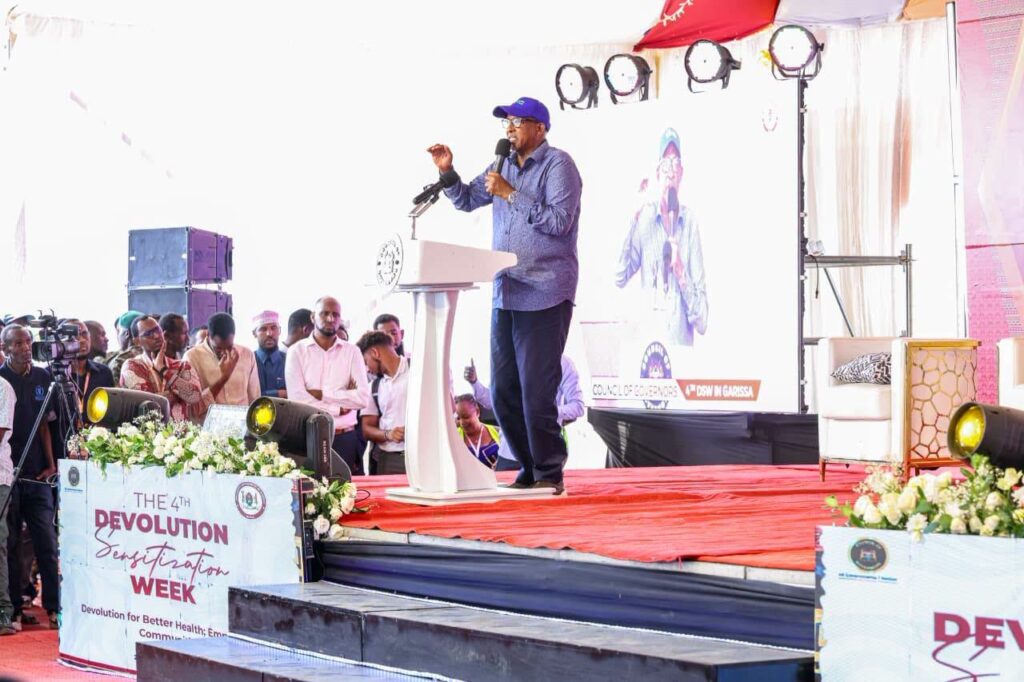
Speaking during the Devolution Sensitization Week in Garissa, Duale said a parliamentary system would allow the party or coalition with the majority of Members of Parliament to form the government, instead of relying on presidential elections driven by ethnic voting blocs.

The Cabinet Secretary said proponents of constitutional reforms had previously advocated for both devolution and a parliamentary system but were forced to settle for devolution after the latter proposal failed to gain support.
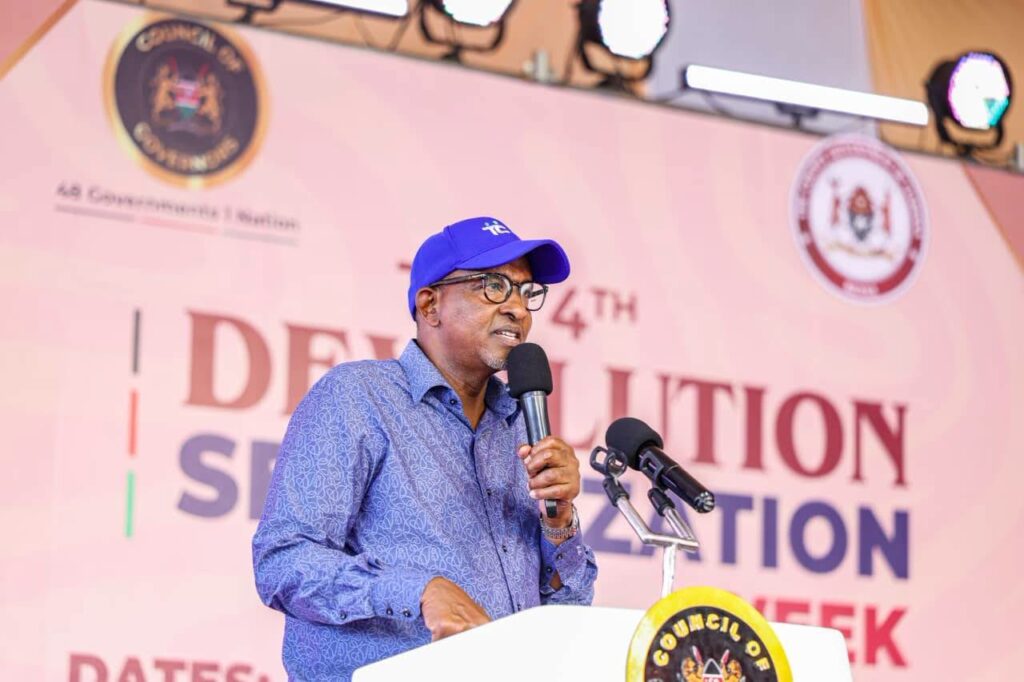
“Those who believed in the tyranny of numbers opposed the parliamentary system. Before I die, I hope Kenya will eventually adopt a parliamentary system of government,” Duale said.
He noted that former Prime Minister Raila Odinga had consistently supported a parliamentary model because it would broaden opportunities for leadership across all communities, regardless of their population size.
According to Duale, such a system would enable leaders from smaller communities—including the Pokot, Mijikenda and Somali to occupy top leadership positions through parliamentary majority rather than ethnic numerical strength.
Responds to Gachagua’s ‘Tyranny of Numbers’ Claims
Although he did not directly mention former Deputy President Rigathi Gachagua, Duale’s remarks appeared to respond to recent statements by the opposition leader, who has argued that pastoralist counties lack sufficient votes to influence presidential elections.
Duale dismissed that narrative, saying political power should not be measured solely by population numbers.
He added that regions such as Northeastern and the Coast could also build strong political alliances capable of influencing national leadership under any democratic system.
Disputes Opposition’s Voter Numbers
The Health CS also challenged claims by Gachagua that the opposition coalition commands nearly eight million votes ahead of the 2027 General Election.
Duale said he had reviewed the Independent Electoral and Boundaries Commission (IEBC) voter register and found that the figures being cited were inaccurate.
According to him, the regions referenced by the opposition account for approximately 3.5 million registered voters, significantly lower than the figures being publicly claimed.
Defends His Political Record
Duale also defended his tenure as Leader of Majority in the National Assembly, dismissing claims that he owed the position to former President Uhuru Kenyatta.

He said the position resulted from the coalition agreement between The National Alliance (TNA) and the United Republican Party (URP) following the 2013 General Election.
“Nobody appointed me Leader of Majority. The position came through the coalition agreement between TNA and URP. When William Ruto became Deputy President, I assumed the position of Leader of Majority,” he said.
Governors Clarify Devolution Functions
The event brought together several national and county leaders, including Garissa Governor Nathif Jama, Mombasa Governor Abdulswamad Sheriff Nassir, Baringo Governor Benjamin Cheboi, Garissa Township MP Dekow Bare, and Sigor MP Peter Lochakapong.
During the forum, Governor Abdulswamad Sheriff Nassir also addressed recent reports suggesting that some functions under Deputy President Kithure Kindiki had been transferred to the Prime Cabinet Secretary.
The Mombasa governor clarified that the changes stemmed from a Cabinet resolution concerning the presentation of devolution-related regulations before Parliament.
He explained that while the Deputy President chairs the Intergovernmental Budget and Economic Council (IBEC), the responsibility of presenting Cabinet regulations to Parliament rests with a Cabinet Secretary.
“What happened was a delegation of authority for purposes of regulations. It was not a transfer of the Deputy President’s constitutional functions,” Abdulswamad said.
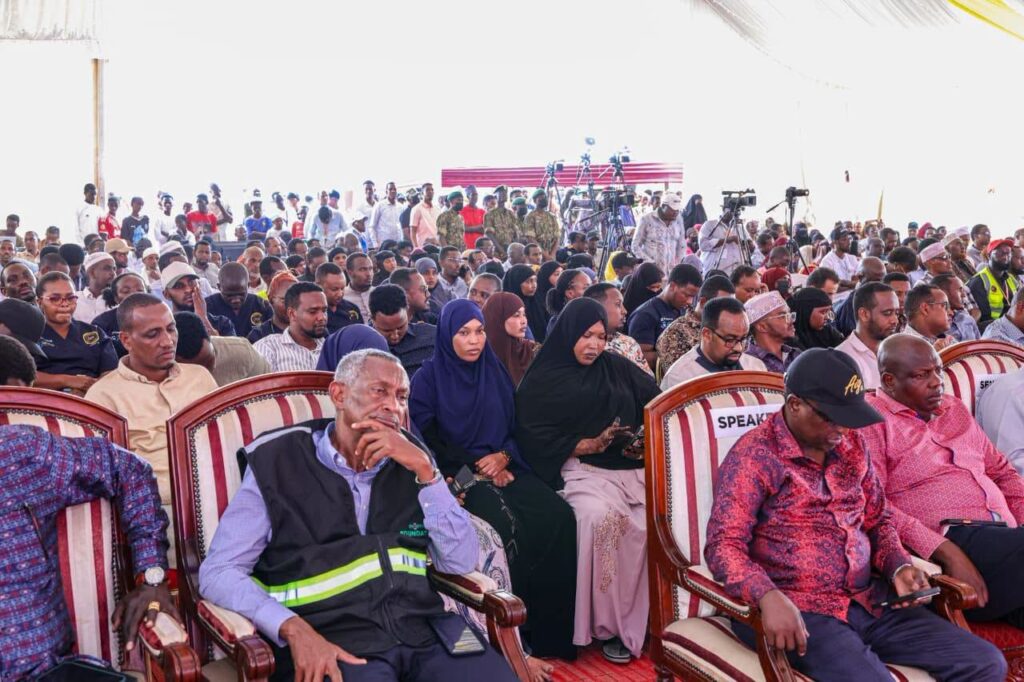
The remarks came during the Devolution Sensitization Week, where leaders from both levels of government discussed the progress of devolution and its role in strengthening service delivery across Kenya.


